Can you apply for a job if your Dutch is not perfect?

Yes, in many cases you can.
You do not always need to speak perfect Dutch to find a job in the Netherlands. For some jobs, good Dutch is very important. For other jobs, basic Dutch or English may be enough.
The most important question is not:
“Is my Dutch perfect?”
The better question is:
“Can I understand the work, communicate with my colleagues and work safely?”
If the answer is yes, there may be more opportunities than you think.
Do I need to speak Dutch to work in the Netherlands?
That depends on the job.
Some positions require strong Dutch language skills because communication is a big part of the work. Think about jobs where you have a lot of contact with customers, patients, students or other people.
For other jobs, the language requirement may be lower.
This is often the case in areas such as:
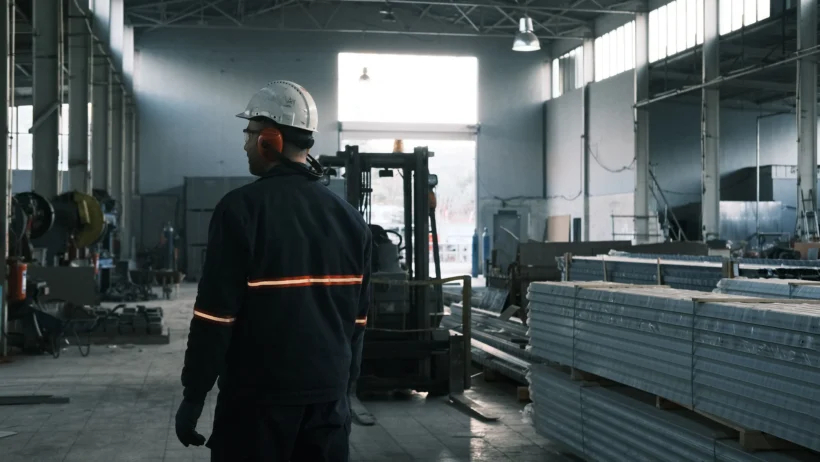
- production;
- logistics;
- warehousing;
- assembly;
- technical work;
- order picking;
- packing;
- some operator positions.
In these jobs, practical skills, reliability and safety can sometimes be more important than perfect grammar.
Dutch government guidance also states that employers should only set requirements that are relevant to the job. A high Dutch language requirement can be justified when it is genuinely necessary for the position. Rijksoverheid
Can I apply if I only speak English?
Sometimes, yes.
Some companies have international teams where English is commonly used. In those workplaces, speaking English well may be enough to start.
At other companies, you may need at least some Dutch.
For example, you may need to understand:
- safety instructions;
- work schedules;
- machine instructions;
- warehouse labels;
- conversations with your team leader;
- emergency procedures.
That does not always mean you need fluent Dutch.
It may simply mean that you need enough Dutch to understand important instructions and communicate clearly at work.
Which jobs can I do if my Dutch is not perfect?
There is no single list that applies to every company, but there are several types of jobs where limited Dutch may be less of a problem.
Production worker
As a production worker, you may work with machines, products, packaging or assembly lines.
The work is often practical and structured.
If instructions are clear and the team can communicate with you in English or simple Dutch, this can sometimes be a good starting point.
Warehouse worker
In a warehouse, you may:
- collect orders;
- pack products;
- receive goods;
- prepare shipments;
- move stock;
- load or unload trucks.
Some warehouses work with scanners and clear systems, which can make the work easier to learn even when your Dutch is still developing.
Order picker
Order picking is another job where practical skills can be more important than perfect Dutch.
You usually follow a clear order list or scanner system and collect the right products.
You still need to understand instructions and safety rules, but fluent Dutch is not always necessary.
Assembly worker
Assembly work can also be suitable if you are good with your hands and can follow instructions.
You may put together parts, use tools or check finished products.
Technical understanding and accuracy can sometimes be more important than language.
Forklift or reach truck driver
If you have the right certificate and experience, some employers may be more interested in your practical skills than in perfect Dutch.
However, communication and safety are especially important when you are driving equipment in a busy warehouse.
That means you must be able to understand instructions well enough to work safely.
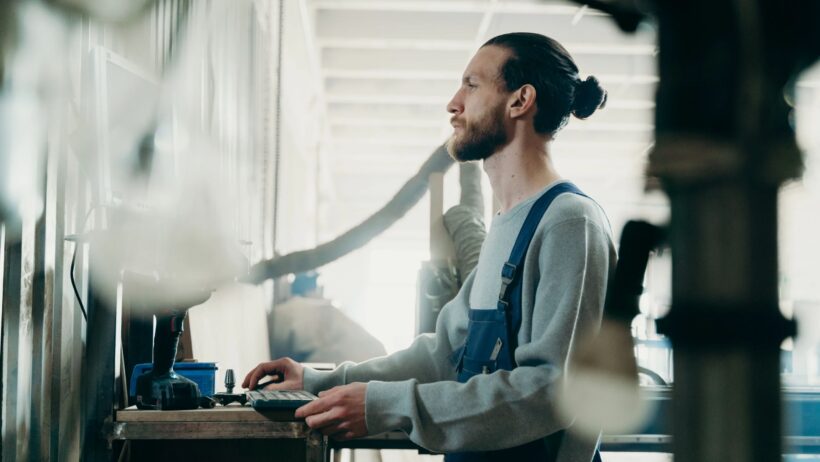
Technical or operator jobs
Some technical jobs can also be possible if your Dutch is still improving.
Experience with machines, maintenance, production lines or technical systems can be valuable.
For more complex operator positions, stronger Dutch may be required because you often need to read instructions, report faults or communicate about production problems.
When is good Dutch more important?
There are jobs where language skills are much more important.
Examples include:
- healthcare;
- education;
- customer service;
- reception work;
- office jobs with a lot of Dutch communication;
- supervisory positions;
- jobs with complex safety procedures.
UWV also points out that language can be a major barrier in some professions, especially where clear communication is essential, such as healthcare. UWV
So if one employer says your Dutch is not strong enough, that does not necessarily mean you cannot work.
It may simply mean that the language level is important for that specific job.
How good does my Dutch need to be?
There is no single language level that applies to every vacancy.
One employer may be comfortable with basic Dutch.
Another may require you to speak and read Dutch confidently.
A useful way to think about it is this:
Can you understand important instructions?
Can you ask questions if you do not understand something?
Can you communicate if there is a problem?
Can you understand safety information?
If you can do those things, you may already be suitable for more jobs than you expect.
Should I mention that my Dutch is not perfect?
Yes.
It is better to be honest.
But don’t write:
“My Dutch is bad.”
Instead, explain what you can do.
For example:
“My Dutch is still improving, but I understand basic instructions and I speak English well.”
Or:
“I am learning Dutch and I can already understand simple work instructions.”
This gives an employer much more useful information.
It also shows that you are actively improving.
Can an employer reject me because my Dutch is not good enough?
An employer may require a certain level of Dutch if that language level is genuinely necessary for the job.
For example, strong Dutch may be reasonable for a position where communication is a central part of the work.
At the same time, employers should not demand a higher language level than the job actually requires. Dutch equal-treatment guidance says language requirements should be relevant and objectively justified.
A 2026 decision by the Netherlands Institute for Human Rights also stressed that, when Dutch proficiency is essential, employers should clearly explain what level is required and why.
What if I understand Dutch but do not speak it confidently?
Apply anyway if the job interests you.
Many people understand more than they can speak.
That is normal when you are learning a new language.
Tell the recruiter exactly that.
For example:
“I understand Dutch better than I speak it, and I am comfortable receiving simple instructions in Dutch.”
That gives a much clearer picture than simply saying that you “do not speak Dutch”.
What if I make mistakes when speaking Dutch?
You probably will.
That is part of learning.
Most employers are more interested in whether communication works than whether every sentence is grammatically perfect.
If your colleague understands you and you understand the instruction, that is often what matters in practical work.
The important thing is to ask when you are unsure.
Especially when the instruction is about:
- safety;
- machinery;
- chemicals;
- lifting;
- quality;
- emergency procedures.
Never pretend you understand something important when you do not.
Should I learn Dutch even if I can already work in English?
Yes.
Even if you find a job where English is enough, learning Dutch can increase your opportunities.
It may help you:
- communicate more easily with colleagues;
- understand instructions faster;
- qualify for more vacancies;
- move into higher-level positions;
- become a team leader or operator;
- feel more comfortable at work.
You do not need to wait until your Dutch is perfect before applying.
You can work and improve your Dutch at the same time.
Can BiaFlex help if my Dutch is still improving?
It is always worth asking.
At BiaFlex, the most important thing is finding out what you can do, what kind of work you are looking for and which employers may be a good match.
Some employers require good Dutch.
Others may have more possibilities for English-speaking candidates or people who are still learning Dutch.
That can vary per vacancy, company and team.
So do not automatically reject yourself because your Dutch is not perfect.
Tell us:
- which languages you speak;
- how much Dutch you understand;
- what work experience you have;
- what kind of job you want;
- whether you are currently learning Dutch.
Then we can look at the possibilities together.
Looking for work nearby? Take a look at our current vacancies in Barneveld and the surrounding area’s and see which jobs match your experience, availability and language skills.
Your Dutch does not have to be perfect to take the first step
Perfect Dutch can open more doors.
But you do not always need perfect Dutch to start working.
For many practical jobs, your experience, motivation, reliability and ability to work safely can be just as important.
The best thing you can do is be honest about your language level and keep improving.
See a vacancy that looks interesting?
Do not immediately think:
“My Dutch is not good enough.”
Ask first.
You may be closer to the right job than you think.
Deel dit bericht: